Pasaykamuy! Welcome!
Quechua, like Mongolian and other Turkic languages, is an agglutinative language. The grammar of Quechua is built up of many suffixes that are usually attached to certain verb roots and nouns. Suffixes are essentially the building blocks for navigating information and direction in Quechua. You can also download the PDF of the Quechua suffix table at end of post.
Culture Fact
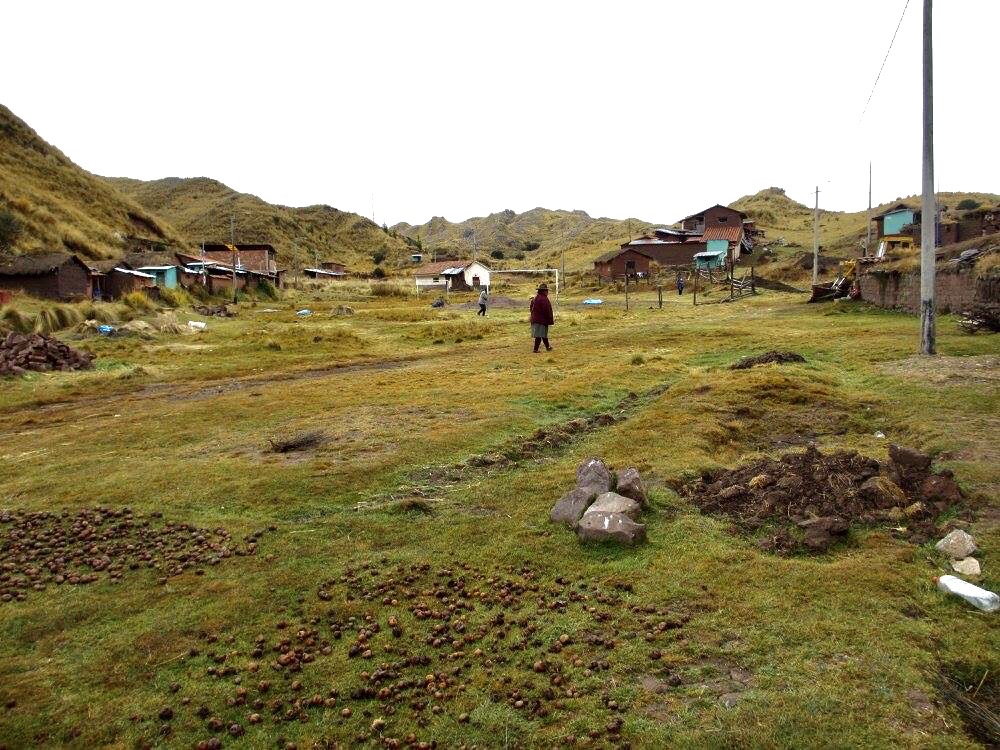
The potatoes laying on the ground in the picture above are called chuño. These potatoes are left on the ground to cook overnight during chilly and sometimes sub zero temperatures. They are also left outside during the say to cook under the direct heat of the sun. The cooking practices of chuño are even said to predate the Inca empire.
Now back to grammar, here are some of the most commonly used suffixes used in Quechua. And, remember that, once you combine suffixes to word roots, you will be speaking, reading, and writing in Quechua in no time.
Quechua Suffix Recipe:
|
-Manta |
From |
Qosqo llaqta-manta (From Cuzco) |
|
-Pi |
In (location) |
Qosqo-pi llank’a-ni (I work in Cuzco) |
|
-q/pa If ending in a vowel use –q If ending in a consonant use- pa |
‘S (possession) |
Noqa-q Qochay-mi (My lake) Ivan-pa Mochila-n (Ivan’s backpack) |
|
-Kama |
Until |
Tupananchis-kama (See you later) Tuta-kama (See you tonight) Paqarin-kama (See you tomorrow) |
|
-Ta | 1) Object marker for direct and indirect object 2) Destination | 1) Cuy-ta mihushani (I am eating guinea pig) 2) Qosqo-ta rishani (I am going to Cuzco) |
|
-Man |
To(wards) |
Qosqo-man purishani. (I am walking towards Cuzco) |
|
-pis/pas |
And/also/too |
Noqa-pis (Me too) Karru-pis avión-pis runa-kuna Qosqo-ta rinku. (You can go to Cuzo by car and by plane) |
|
– Wan |
With |
Mamay-wan rimashani (I am talking with my mother) |
|
-Rayku |
Because of, due to, on behalf of | Machu Picchu rayku-n Qosqo-man hamurqani (I came to Cuzco because of Machu Picchu) |
|
-Kuna |
To make words plural |
Runa-kuna (people) Cuy-kuna (Guinea pigs) |
|
-Chu |
Marks questions and negatives |
Allillanchu (Hello, how are you?) Qan runasimi-ta rimanki-chu? (Can you speak Quechua?) Answer-> Ari, noqan runasimi-ta rimani. (Yes, I can speak Quechua) Manan, noqa runasimi-ta rimani-chu. (No, I can’t speak Quechua) |
|
-Niq/neq |
Near |
Noqa Qosqo-neq-pi tiyashani yachashani ima. (I live and study near Cuzco) |
|
-Paq |
For |
Pi-paq? (For who?) Pipaq chay pollera-ta rantiranki? (For whom was this skirt bought?) Answer-> Urpichay-paq pollera-ta rantirani. (I bought this skirt for my sweetheart/ my love.) Mamay-paq llank’ani (I work for my mother) |
|
-May |
Where |
May-man? (to where?) May-man purishanki? (To where are you walking) |
|
-Cha |
Used to emphasize something “little.” It is used in the same context as words ending in –ito, ita, and –cito, -cita in Spanish. |
Wasi= House (Casa) Wasicha- Little house (Casita) Erqe-cha= Little boy/child |
Phrases:
Maypi tiyanki? = Where do you live?
pi– in/ location (en in Spanish)
nki– (Qan- You) conjugation for the verb Tiyay= To live
Imawan? = With what?
Ima= what? (Que?)
wan= with
Noqapas allillanmi kashani = I am also doing well
pas= also (tambien)
ni= (I) Vern conjugation for Kashay= To be (estoy/ estar)
Some Need to Know Nouns:
- Pachamama= Mother nature (Madre naturaleza)
- K’illu= Street (Calle)
- Mayu= River (rio)
- Llaqta= City/ village (Pueblo)
- Qhatu= Market (Mercado)
- Qocha/ Qocha mama= Lake (Lago)
- Yunka= jungle (Selva)
- Orqo= Mountain (Montaña)
- T’ika= Flower (flor)
- Wasi= House (Casa)
- Alqo= Dog (Perro)
- Khuntur= Condor
- Michi= Cat (Gato)
- Kawallu= Horse (Caballo)
- K’illa= Moon (La luna)
- Sara= Corn (Maiz)
- Khunpa= Friend (Amigo)
- Ukuku= Bear (El oso)
- Rit’i= Snow (Nieve)
- Ayllu= Family (Familia)
- Apu= Mountain God
- Layqa= Witch (Bruja)
- Quyllurkuna= Stars (La estrella)
- Phuyu= Cloud (Nube)
PDF of Suffix Table:
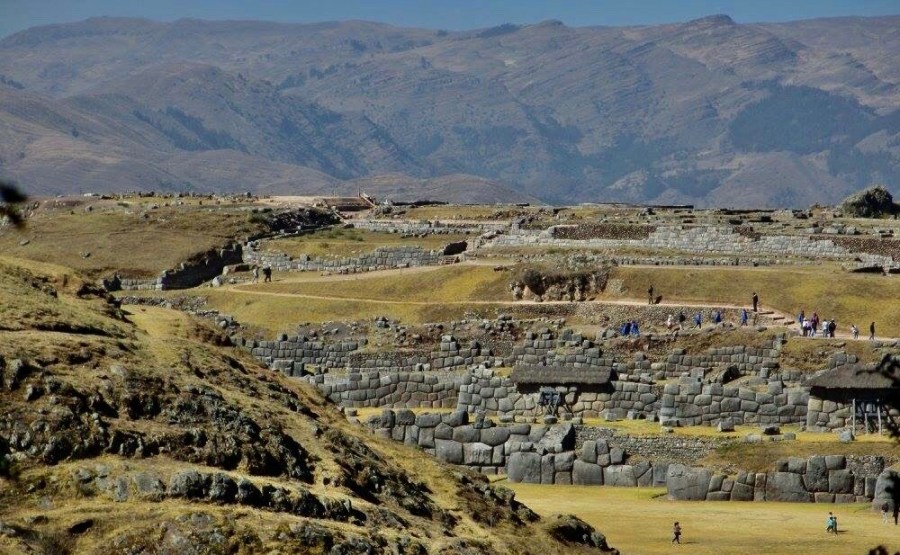
Banner image taken by me at Saqsaywahuaman near Cuzco city in Perú.
 Tales of a Wandering Ghost