Learning how to speak Northeastern Chinese can be a lot of fun. However, I bet some of you may be wondering whether if it is worth the time and effort…especially since Chinese is already a hard language to learn. However, if you are interested in learning about another region of China, then learning northeastern mandarin would be worth the effort.
Learning this dialect grants you the opportunity to surprise unsuspecting Chinese locals while also expanding your regional Chinese cultural knowledge to connect with northeastern Chinese people around the world who miss speaking their dialect. Another benefit of learning to speak this dialect is to simply be able to speak Chinese without sounding you learned from a textbook or having standard “textbook” Chinese proficiency . This is a dialect that will take you far in the Chinese speaking world. It will surprise people, make people laugh, and expand your regional Chinese cultural breadth. In a way, I see learning a new dialect like adopting and adapting to another culture. You may already be able to speak standard mandarin but learning a regional dialect connects you deeper into the land and people around you. Essentially, it’s more immersive than speaking only standard mandarin (普通话).
In the chart below, I added some of the most used words and phrases I have heard and used during my stays in Northeastern China.
| Word | Meaning | Sentence |
|
俺 ǎn 俺们 ǎn men |
我 (们): I (we) |
俺(们)就是个东北人 |
|
嘎哈 gá ha 噶哈 gà ha |
干什么: What are you doing? What are you up to? |
你嘎哈去? 你嘎哈呢? |
|
啥 shá |
什么: what |
啥意思? 为啥呀? |
|
咋 zǎ *咋整 zǎ zhěng *咋着儿 |
怎么: how *怎么办:What’s to be done? *怎么样 |
你咋地了?你咋去? *这事儿可咋整呢? *这个不要咋着儿 |
|
贼/老 zéi/ lǎo *贼赤拉 zéi chì lā |
很: very *很;非常;特别 |
老好了 *贼赤拉埋汰 |
|
拉的 lāde *贼拉 zéi lā |
非常: very much 很;非常: very; very much |
外边儿贼拉的冷。 贼拉香/贼拉小。 |
|
嘎嘎 gá gá |
Denotes a stronger emphasis of 特别, 非常, and 很 |
哈尔滨市嘎嘎的冷! |
|
唠嗑儿 lào kēr |
聊天儿: to chat, to gossip |
贼久我和你们唠嗑儿。 |
|
麻溜 má liū |
快一点儿: Come quick; Quickly |
麻溜, 麻溜! 咱们出去吧! |
|
上该里溜达 shǎnggāililiūda |
上街上: to go on the streets, to go out |
如果你上该里溜达去,人们都会知道你是个老外。 |
|
得瑟 dè se |
翘尾巴,傲慢: to be a show-off, smug, cocky |
这个男人贼得瑟的。 |
|
钢钢地好 gānggāngdihǎo |
非常好: very good |
钢钢地好! |
|
埋汰 mái tài |
脏: dirty |
外面儿的路贼噶的埋汰! |
|
老鼻子 lǎo bí zi |
许多,特别多: a lot of; many |
昨天市场的人可老鼻子了! |
|
土包子 tǔ bāo zi |
农民:Country bumpkin, peasant |
我不是个土包子! |
|
备不住 bèi bù zhù |
也许: Perhaps |
这姑娘备不住先走了。 |
|
稀里马哈 xī lǐ mǎ hā |
马虎: careless |
我爹做得饭贼噶的希里马哈。 |
|
一家伙(儿) yī jiā hǔor |
一下子: all at once, all of a sudden |
这问题一家伙儿把我难住了。 |
|
斯斯哈哈 sīsī hāhā |
Onomatopoeia, To express the feeling when your hands get cold after being outside without gloves that you use your breath in order to warm up your hands. |
斯斯哈哈的感觉 |
Here are some famous northeastern tunes and examples of the dialect to get you excited!
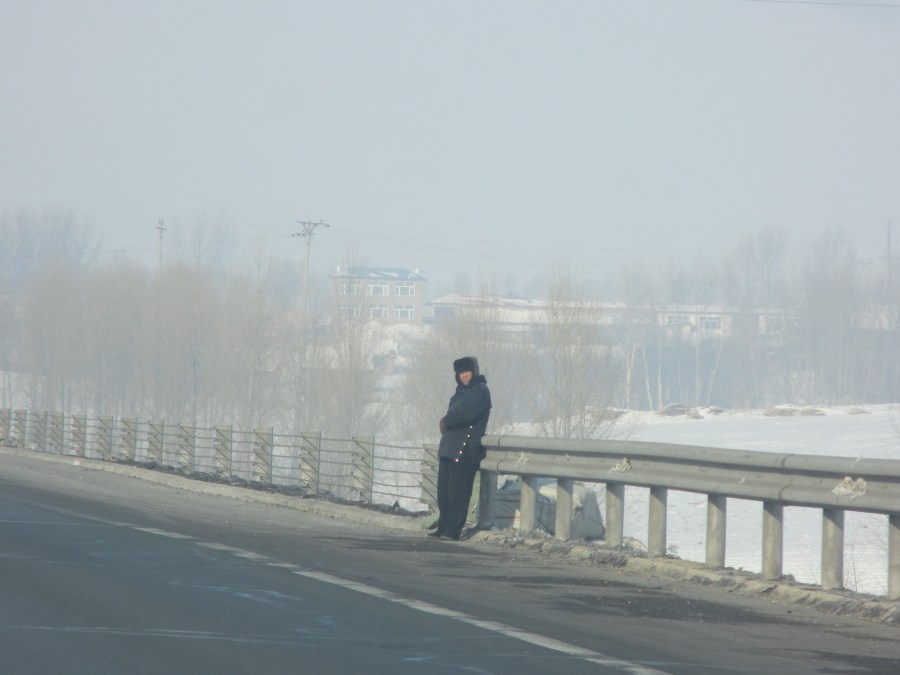
Banner image of northeastern man with Russian hat taken by me near Harbin, China.
 Tales of a Wandering Ghost
Pingback: About Northeastern China – Tales of a Wandering Ghost