
Northeastern Mandarin or 东北话 (Dongbei hua) is a regional dialect of Mandarin Chinese. It is a dialect famously known the consistent use of erhuayin (儿化音) or addition of an “er” sound at the end of each word. Northeastern Mandarin is often considered comical and crude by Chinese speakers south of the Jilin provincial border. I have often been told that it is deemed as a “peasant” or hillbilly form of spoken Chinese. The majority of Chinese comedy often uses and makes fun of the northeastern accent simply because of how informal it sounds to standard mandarin. The Chinese comedian Zhao Benshan is famed for using Northeastern Mandarin in his sketches on Chinese life. Although this dialect has been condemned as an informal and comical dialect, it really one of the most colorful and regionally rich Chinese dialect to learn. I, as a laowai (老外) or just a very proud “foreign” northeasterner, can’t wait to represent this dialect with you all! However, before I delve further into the rich culture of northeastern China and its (in)famous dialect, I’ll first share with you my transformational story of how I became a “foreign” northeasterner.
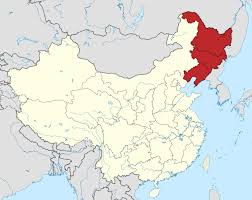
I attended a Chinese high school in the northernmost province of Manchuria (Heilongjiang province). While I was there, I had the opportunity to immerse myself in the northeastern dialect by living with host families from different ethnic northeastern backgrounds: North Korean, Han, and Manchu. I learned so much from them and my classmates and to this day, I still choose to proudly speak Chinese with a northeastern accent. It reflects who I am and the journey I made studying Chinese. However, like many other dialects in China, the tones vary. There have been several instances when I was in Taiwan, I would say a phrase with my “native northeastern” Chinese accent (using the correct tones in Dongbei standards) and local Taiwanese would have no idea what I was saying and often comment that my tones were incorrect. This made me feel like my Chinese had lost its touch but it was right after those experiences when I truly realized just how varied the Chinese language and tonal system is. Taiwan taught me that no matter how many years it has taken me to study and master this language, I will always say pronounce something wrong to a person from a different province or Chinese speaking country.
In this series of blog posts, I will steadily share with you all the lists that I have spent years compiling, studying, and practicing from. I hope you all enjoy what is to come!
加油!
Banner image taken by me at the annual fire and ice festival in Harbin, China.
 Tales of a Wandering Ghost