In this post, I am sharing the translation of a book review that I wrote in Chinese. I reviewed the book (华夏变绿-历史记忆与族群认同) “On Chinese Borderlands- Historical Memory and Ethnic Identity” by Wang Mingke (王明珂)
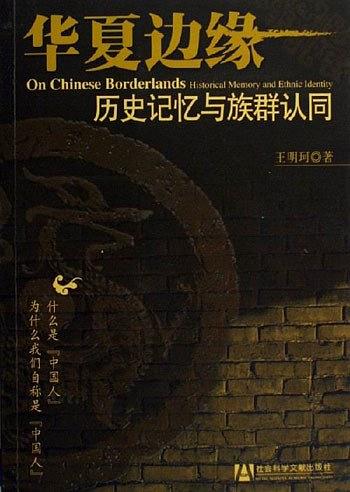
华夏边绿书评
Book Review of Wang Mingke’s Book: On Chinese Borderlands: Historical Memory and Ethnic Identity.
This book is compiled into four parts that consist of twelve chapters. In the preface of this book, the author, Wang Mingke, introduces his audience with the question of “what is a Chinese person?” The author also discussed some of the ethnic problems that are happening in China today. An example of this is found in his theory that cultural traits should not be corresponded to ethnic groups. Wang Mingke does not believe that the term “ethnic group” has an “objective existence.” He, ultimately, theorizes that one’s ethnic identity derives from emotions.
这本书分为四个部分, 总共十二章。 在这本书的前言中,作者王明珂向观众介绍了“什么是 中国人?” 作者还讨论了当今中国发生的一些民族问题。 举例来说,他的理论认为文化特征不应该与种族群体相对应。 王明珂并不认为 “族群”一词具有“客观存在”的概念。他还认为,一个人的民族认同源于情感。
In part two of the book, the author investigates archeological and ecological boundaries in China to look at climate change during the late Neolithic period. The areas investigated were the Hehuang (河湟), Ordos (鄂尔多斯), and the Western Liao river (西辽河). These chapters look at how climate changed the lives of the indigenous peoples in this region. The changes they made include using the subsistence system along with adopting herding practices instead of agriculture. Religion was also one of the many changes that happened during this time.
在本书的第二部分,作者研究了中国的考古和生态界限,以了解 新石器时代晚期的气候变化。 他调查的地区是河湟河湟,鄂尔多斯和 西辽河。 这些章节探讨了该地区的土着如何因应气候变化而改变他们 的生活方式。 他们所做的改变包括使用生存系统,采用牧业实践而非 农业。 宗教也是这段时期发生的众多变化之一。
In part three, the author continues to explore how these ecological shifts in society changed ethnic boundaries. The author discussed the shifted “boundaries” during the Shang and the Western and Eastern Zhou dynasties. However, an interesting aspect during the Eastern Zhou was that the people were invaded by the Rongdi (戎狄) people. To protect themselves against this invasion, the people of the Eastern Zhou had to unite their territories together creating the Huaxia or Chinese identity.
在第三部分中,作者继续探讨社会中这些生态变化如何改变种族 界限。 作者讨论了商周,西周,东周时期“界限的变化”。 然而有趣 的事,东周时期的人们曾被戎狄入侵。 为了保护自己免受这种入侵, 东周人民不得不将他们的领土联合起来,以创造出华夏或中国人的身 份。
The fourth part of this book discusses who the Huaxia people are and how they were able to use and create historical documents to observe these enforced ethnic boundaries. The chapter also mentioned how historical documents were used in the author’s research in order for him to further understand how the Huaxia people used collective memory to make allies with other ethnic groups in the region. However, the act of making allies also created physical boundaries between them and the Huaxia people. These documents also have helped the author’s case study of the Qiang (羌) guided him in understanding how the Huaxia observe other ethnic groups.
第四章探讨的是华夏人民如何利用和创建历史文献来观察这些先 天的种族界限。 本章还提到了王明科如何在他的研究中使用历史文献来进一步了解华夏人如何利用集体记忆与该地区其他民族建立盟友。 然而,建立盟友的行为也让他们与华夏人民之间产生了物理界限。 这 些文件也有助于作者对羌的案例研究,且该文件也帮他了解华夏如何 观察其他民族。
What I found the most interesting while reading this book was the amount of archaeological resources the author incorporated into his research. This proves how history and anthropology can work together. I liked how the author used archeology to examine and trace the history of the Huaxia to the Neolithic age and earlier. I also found the author’s insight concerning race and language to be very interesting.
有趣的事,在阅读这本书时,我发现了作者在他的研究中所融入 的考古资源数量。 这证明了历史和人类学是如何相辅相成的。 我喜欢 作者使用考古学的方式来检查和追溯华夏时期到新石器时代的历史。 此外,我发现了作者对种族和语言的见解非常有趣。
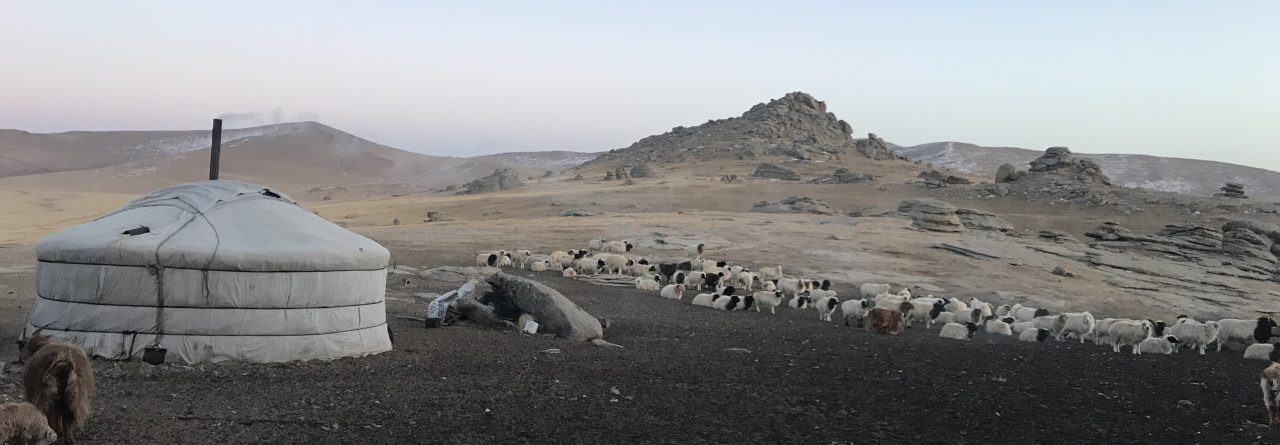
In the book, Wang Mingke specifically noted that race and language shouldn’t be used to define nationality. The definition of what is the “core of a nation” concerns whether an ethnic group considers themselves to be a part of a single nationality or many different nationalities. An example of this can be observed with the Inner Mongolians. The Inner Mongolians are culturally different from the Han Chinese in language, lifestyle, and perspective. The Han Chinese are a sedentary people whereas the Mongols are a nomadic people. Yet, Inner Mongolia is a part of China leading me to asking the question of “are they Chinese by nationality?” Is the core of the Mongolian nation Mongolian or Chinese? It is questions and thoughts like this that make the subject of this book interesting and complex.
王明珂在书中特别指出,种族和语言不应该被用于定义国籍。 “一个国家的核心”的定义涉及一个民族是否认为自己是单一国籍或 许多不同国籍的一部分。 这个例子可以在内蒙古人身上观察到。 内蒙 古人在语言,生活方式和观点上与汉族的文化有所不同。 汉族人是 sedentary 的人,而蒙古人则是游牧民族。 然而,内蒙古是中国的一部 分的事实让我有“他们是中国人吗?”的疑问。究竟内蒙古民族的核 心是蒙古族还是中国人? 以上的问题和想法让这本书的主题变得既有 趣和复杂。
I also liked the theories the author made throughout the book. It shows how much research and thought has been put in while writing this book. One of the theories I liked was about how a nation is formed. Wang Mingke believes that a nation is divided by two structures: collective memory and structural amnesia. Collective memory happens when people unite and create a nation together. On the other hand, Structural amnesia is when two or more groups of people become separated and forget their nation’s collective memory. I also appreciated how the author included that pressures from outside come from internal issues in his research. He also examined how resource competition inspired the formation of margins that make ethnic groups move away from other ethnic groups to create a newly established collective memory.
我也很喜欢作者在整本书中所提的理论。 它显示了作者在撰写本 书时投入了多少研究和思考。 我喜欢的理论之一是关于一个国家是如 何形成的。 王明珂认为,一个国家一共被分成两种结构:集体记忆和 结构性遗忘。 当人们团结起来并共同创造一个国家时,就会产生集体 记忆。 另一方面,当两个或更多人群分离且遗忘他们的国家集体记忆 时,结构性健忘症便会产生 。 我很欣赏作者在他的研究中提到外部的 压力来自于内部问题。 他还研究了资源竞争如何激发边界的形成,这 些边界的形成会使某个种族远离其他种族,以创造新建立的集体记忆。
In short, this book showcases the author’s opinion and research on the topic of the Huaxia (Chinese) identity. Wang Mingke compiled several archaeological and historical materials to theorize and understand collective memory. He also used these resources to see how they contributed to the Huaxia identity by how they changed and established ethnic boundaries and maintained allies. However, I would like to end this review with two questions.
- Does the use of archaeological and historical materials misinterpret the overall perspective one can have while researching a specific ethnic group?
- Are historical documents and archaeological artifacts that reliable for researching the topic of identity?
总而言之,本书展示了作者对华夏身份的看法和研究。 王明珂编 写了几本考古学和历史资料,用以理解集体记忆,并使之理论化。 他 还利用这些资源来了解华夏人民如何透过改变,建立种族界限和维护 盟友的方式来为华夏的身份做出贡献。 但是,我想以两个问题总结本 次心得。
- 使用考古和历史材料是否会使人们在研究特定种族群体时, 在整体观点上产生误解?
- 历史文献和考古文物在研究身份主题时是否可靠?
I hope you enjoyed this book review and my translation!
Sincerely,
The Wandering Ghost
 Tales of a Wandering Ghost