In this post, I share my translations of a few poems from the infamous Ming dynasty (1368-1644) book, The Golden Lotus (金瓶梅), written by the anonymous Laughing Scholar of Lanling (兰陵笑笑生). The poems prove an interesting, somewhat uncomfortable, yet an absolutely intriguing insight into how femininity was perceived during the late Ming dynasty. These poems also uncover the biblical “Adam and Eve” theme of depicting women as the ruin of man.
If you are interested in learning, reading and translating classical Chinese text in the future, you can check out my post How to Read Classical Chinese for further reference.
第一回:景楊剛武松大虎:潘金蓮嫌夫賣風月.
Chapter 1: Wusong fights the tiger on Jingyang mound; Pan Jinlian resents her husband and has an affair..
賣風月 mài fēng yuè means to sell romance or in this case to have an affair/ commit adultery.
丈夫隻手把吳鉤,
The man grips the hook of Wu in his hand,
欲斬萬人頭。
eager to chop off the heads a thousand people.
如何鐵石,打成心性,
How can a heart be forged from iron and stone,
卻為花柔?
And be as soft as a flower?
请看项籍并刘季,一怒使人愁。
Look at Xiangji and Liu Ji (warlords of the Qin dynasty), whose anger causes others to distress.
只因撞着,虞姬戚氏,豪杰都休。
They were troubled by women named Yu Ji and Lady Chi, and the heroic qualities of men weakened by women.
第四回: 淫婦背武大偸姦:鄆哥不憤鬧茶肆。
Chapter 4: The woman has an affair behind Wuda’s back: Yunge is angry and fights in the tea shop.
淫婦 yín fù translates as a loose woman or a prostitute.
酒色多能悮國邦,由來美色喪忠良。
Wine and lust can ruin the State, throughout history women ruined loyal and truthful people.
紂因妲巳宗祀失, 吳為西施社稷亡。
The King of Zhou’s entire lineage came to the end by Daji, the State of Wu was lost to Xi Shi.
自愛青春行處樂,豈知紅粉笑中鎗。
Self-love is followed by pleasure, How is one to be oblivious to disaster beneath a painted smile.
西門貪戀金蓮色,內失家麋外趕獐。
Ximen Qing covets and loves Jinlian’s beauty, so much so that he abandons a tame deer.
第七回: 薛媒婆说娶孟三儿,杨姑娘气骂张四舅。
Matchmaker Xue proposes a match with Meng San’er: Auntie Yang angrily scolds Zhang Sijiu.
烈女心 liè nǚ xīn translates as a woman who dies for her honor.
烈女 liè nǚ is used to describe a woman who follows her husband in death (much like Lady Yu who was introduced in the first chapter of the book).
我做媒人實自能,全憑兩腿走殷勤。
I am the matchmaker and I am good at what I do. I completely depend on my two legs to walk attentively.
唇槍慣把鰥男配,舌劍能調烈女心。
My deadly lips are used to persuading widowers to remarry, My tongue is like a sword that is able to stir up an honorable woman’s heart.
利市花常頭上帶,喜筵餅錠袖中撐。
Lucky money and red flowers decorate my head, gifts from weddings are always accessible in my sleeves.
只有一件不堪處,半是成人半敗人。
There is only one immoral thing that I do, I half help people and the other half, I destroy.
In regards to the theme of women being the “Eve” or destoryer of men in history and literature, here is another poem that represents this “ruin.” The Song of a Beauty is a song-poem by Li Yannian (李延年), a Han dynasty (206 BCE-220 CE) musician. You can even watch this song-poem being sung in the famous martial arts film, House of Flying Daggers (十面埋伏), directed by Zhang Yimou (张艺谋).
佳人曲
Song of a Beauty
北方有佳人,
There is a beauty in the north,
絕世而獨立。
Whose beauty is unique and incomparable.
一顧傾人城,
One glance of hers destroys a city,
再顧傾人國。
Another glance destroys a kingdom.
寧不知傾城與傾國。
Wouldn’t it be better not to know a destroyer of cities and kingdoms?
佳人難再得。
For a woman with such beauty is rarely found again.
All of the english translations of these poems are my own translations. I hope that that this post was a fun read and that you all enjoyed these famous (and even infamous) Chinese poems on dangerous femininity.
Sincerely,
The Wandering Ghost
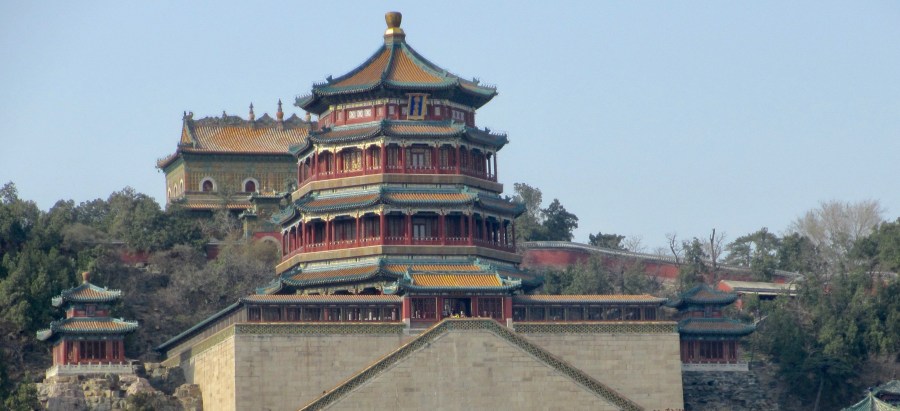
Banner Image of Summer Palace in Beijing taken by me.
 Tales of a Wandering Ghost