In this post, I am sharing the Chinese translation for parts of an essay I wrote about the chapter on the Xiongnu (匈奴列传) from the Records of the Grand Historian (史记) by Sima Qian (司马迁). This essay was a written to bridge my studies in anthropology with Chinese history.
On Translation:
When I write in Chinese, I usually write the essay first in English and then translate it into Chinese, paragraph by paragraph, before rereading it and adding other necessary informations and idiomatic phrases.
I prefer to write simple sentences in English before I translate my essays content into Chinese. I found this method to be very beneficial for translation practice as well as building up comfort and confidence when writing in another language. It also is one of the many stepping stones Chinese learners may take in order to, one day, be able to write an essay in Chinese without the helping hand of English outlines to translate from.
分析史记: 匈奴列传
Analysis of the Xiongnu from the Records of the Grand Historian
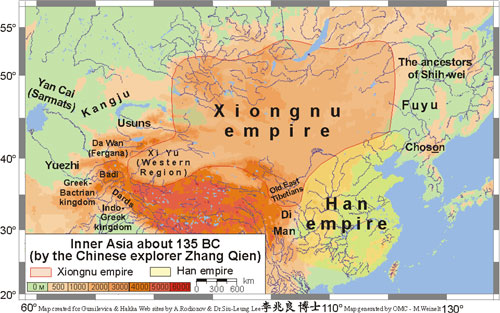
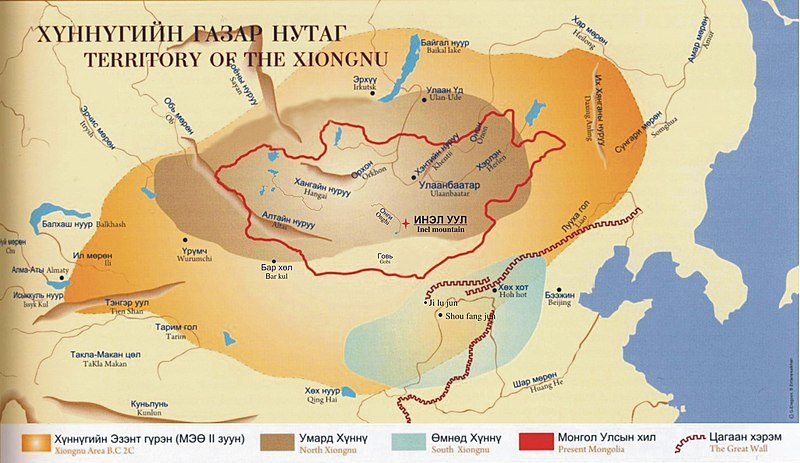
The Xiongnu were a group of nomadic people originating from the Central Asian and Mongolian steppes. They were famed for their complex relationship with China. The Xiongnu were regarded as the “mountain barbarians” by the Han Chinese since before the time of Emperors Yao and Shun. The livestock the Xiongnu raised consisted of horses, sheep, camels, mules, and cows. The Xiongnu recalled their history through only oral storytelling due to having no writing system. The weapons they used included swords, bows and arrows and spears.
匈奴是一群来自中亚和蒙古大草原的游牧民族。 他们因为与中国有着 复杂的关系而闻名。 自尧舜时期以来,匈奴被汉人视为“山野蛮人”。 匈奴饲养的牲畜包括马,绵羊,骆驼,骡子和奶牛。 由于没有书写系统,匈奴只能通过又语相传的方式来回忆他们的历史。 他们使用的武器包括剑,弓箭和长矛。
In Sima Qian’s chapter on the Xiongnu from the Records of the Grand Historian, the story begins with the description of where the ancestors of the Xiongnu people originated from. The ancestors of the Xiongnu were the descendants of the Xia dynasty. It was also recalled that the Xiongnu had to sense of propriety and righteousness and that they were only concerned with “self-advantage.” As the story proceeds, Sima Qian describes the prehistory of this ethnic group to the rise of the Xiongnu empire under Maodun, Touman’s oldest son. The chapter then focuses entirely on Mao Dun’s foreign conquests and negotiations with the Han Chinese. By part four of the story, Sima Qian writes about the conversations that the Xiongnu had with Zhonghang Yue, a Han Chinese defector.
匈奴列传收录于司马迁的“史记”中,该列传一开始描述匈奴人的起源地。 匈奴的祖先是夏朝的后裔。 有人说匈奴必须要有正当感和正义感,而且他们只关心“自我利益”。随着故事的进展,司马迁描述该族群从史前时期发展为成匈奴帝国的过程,该部分主要集中在毛敦征服外国的故事和他与汉人谈判 的过程。 而故事的第四部分则描述匈奴与中国汉族叛逃者岳中航的对话。
As the story continues, the topic of Han Wudi’s war with the Xiongnu is discussed. The attack at border marketplaces and the campaigns between the HanChinese and the Xiongnu become a central theme for describing the empire when it was at its strongest. The Xiongnu divided their lands and were controlled by many leaders to keep track of their steppe land territories.
随着故事的进展来到了汉武帝与匈奴之间的战争。 边境市场的攻击以及汉族与匈奴之间的战役成为描述帝国最强大时代的核心主题。 匈奴划分他们的土地,并由许多领导人控制,以监控他们的领土。
From analyzing the historical stories about the Xiongnu that were compiled by Sima Qian, the majority of the records describe the Xiongnu people and their cultural characteristics in an animalistic way. From the Records of the Grand Historian (史记), Sima Qian discusses how the Xiongnu honor their elders, how the Xiongnu practice marriage, and even on why they prefer using personal names instead of “polite names.” Regarding Xiongnu marriage practices, it was written that a Xiongnu man must marry his stepmother if his father dies.
通过分析司马迁编撰的匈奴历史故事,我们会发现大多数的记录都是以动物的特性来描述匈奴人及其文化特征。 在史记中,司马迁讨论匈奴人如何尊敬他们的长辈,如何实行婚姻制度,甚至为何他们喜欢用个人名字代替 “有礼貌的名字”。关于匈奴婚姻,司马迁写道,如果一个匈奴男人的父亲去世,该男子就必须与他的继母结婚。
。。。等等 (and so on and so forth)
For Reference/ 供参考:
You can read about the Sima Qian’s chapter on the Xiongnu in Chinese online at: https://ctext.org/shiji/xiong-nu-lie-zhuan/zhs
您们可以在这网站上阅读史记的匈奴列传。
Banner image of Xiongnu empire from wikimedia.org.
 Tales of a Wandering Ghost
