If only there were evil people somewhere insidiously committing evil deeds and it was necessary to separate them from the rest of us and destroy them. But the line dividing good and evil cuts through the heart of every human being. And who is willing to destroy a piece of his own heart? – Alexander Solzhenitsyn
Is it reasonable to agree with Solzhenitsyn and acknowledge that every human is “instinctually” divided by good and evil? His query is complicated to philosophically unpack, but isn’t it also a question yields a simple answer? In this post, I explore the boundaries between what is good and evil through the oft time fuzzy lens of the wayward wanderer who has experienced discrimination while traveling.
Unlike the stereotypes discussed in my previous posts, discrimination seems a more distinctly intentional form of misunderstanding and judgement of those who are culturally, racially, and politically different. How do travelers work around the discriminatory pall that frequently defines life abroad? Is it controllable? Perhaps somewhat preventable? Or is it unconsciously instinctual?
I often wonder whether such discrimination is derived from privilege, status, or even prestige. Does it reside only within a cultural group or is it defined by the ephemeral boundaries among intersecting cultural groups? Is there such a thing as “accidental” discrimination? This is a sensitive topic to undress, I will limit my examinations to a few of my own experiences.
Have you ever gone into an Asian restaurant and overheard a person speak slowly, even unconsciously imitating the accent and cadence of the server to better connect with the perceived ethnicity of the surrounding customers and servers? This is a phenomenon I have witnessed in the United States while watching (mostly white) people speak in a slow and exaggerated Asian accent. This is a stereotype within a stereotype that I view as a form of unintentional discrimination. Yet, where would this behavioral trait align with Solzhenitsyn’s philosophy? The imitation of an Asian accent by a non- Asian person may have been forged from pure cultural ignorance with no ill intent surrendered. This behavior is simply cut between the line of good and evil for it may have been blindly well meaning to one and rude to the other. This then proves Solzhenitsyn’s point that every human has a bit of good and evil. It just depends on how one interprets what they mean to them.
Another example of witnessed discriminations abroad includes the portrayal of certain ethnicities as tourists. I am sure some of us may have heard horror stories of tourists behaving poorly abroad. Here, I want to focus on the stereotype of the ugly, fat American traveler. Has this American stereotype influenced discriminatory assumptions towards other strikingly “non-ugly” Americans abroad? I know it has for me.
When I was living in Northeastern China, I encountered an unsurprising yet devastating form of stereotypical discrimination toward American females that is based on uncomplimentary portrayals of females and feminine behaviors. The Hollywood film industry seems to have perfected the portraits of American women as sexually unhinged beings in search of their next prey. This perception, however ridiculous it may seem, has a seriously negative influence on how single American woman are viewed while traveling solo. I remember pushy men with their fantastical expectations of knowing foreign women like me from United States. Most assumed that I would readily sleep with them. It was a frustrating time battling this stereotype about my body and reputation.
On a recent trip to Central Asia, I met with some American girls who kept commenting on how they wanted to sleep with the locals before they left for home. Doesn’t this kind of behavior also influence the unwanted treatment that other American females are wanting to avoid? How does this kind of behavior help this sullied image of the American female abroad? It made me think whether those girls were even aware of their surroundings because not every country tolerates hook-up culture. It also made me wonder question whether the girls cared to know or even knew about the possible impact their behavior would make upon the community or to fellow travelers? Nonetheless, it is careless tourism and can attribute to more negative experiences than positive in my opinion. I also observe this situation as a sign that a traveler must not bring their own cultural experiences into the country they are traveling in. Every country is unique to its own historical and political rhythm and if one expects the place they are currently traveling in to have a health care or a hook-up culture like their country of origin then they are in for a surprise. Never pack your own ethnocentrism into the baggage you carry…. This is one of the evil sides of traveling that many tourists tend to forget, overlook, or are simply ignorant about. It is common but also devastating.
On another note, it is unfortunate how some media stereotypes forge unflattering views of Americans. It also is unfortunate that travelers who misbehave end up leaving a large influence on negative stereotypes. Whenever I travel, I think of myself as an ambassador, even though I am merely a tourist or student, I am a representative for my country from my country and it is my job to make good impressions about my country and my people. Traveling successfully requires traveling appropriately. It is also an art to know that is best to never be selfish and demanding of others as seen through the lens of one’s own ethnocentrism. All in all, these events define the boundaries of good and evil in a traveler’s experience. There really is a fine line between what is considered good and evil when spun by the threads of how cultural misunderstanding, ignorance, and even innocence are all interconnected by the invisible sticky cobwebs of ethnocentrism and discrimination. However, Plato did commend that ignorance is the root and stem in all evil. It is just the matter of how each and everyone would interpret something as evil. Humanity is simply a collection of diverse organisms.
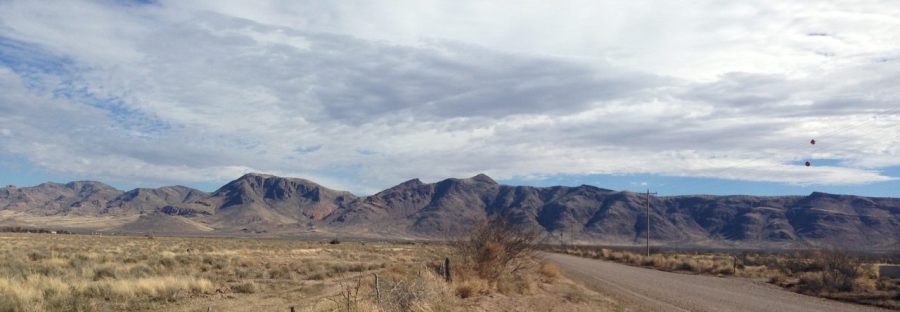
Banner image taken by me at the US-Mexico border
 Tales of a Wandering Ghost