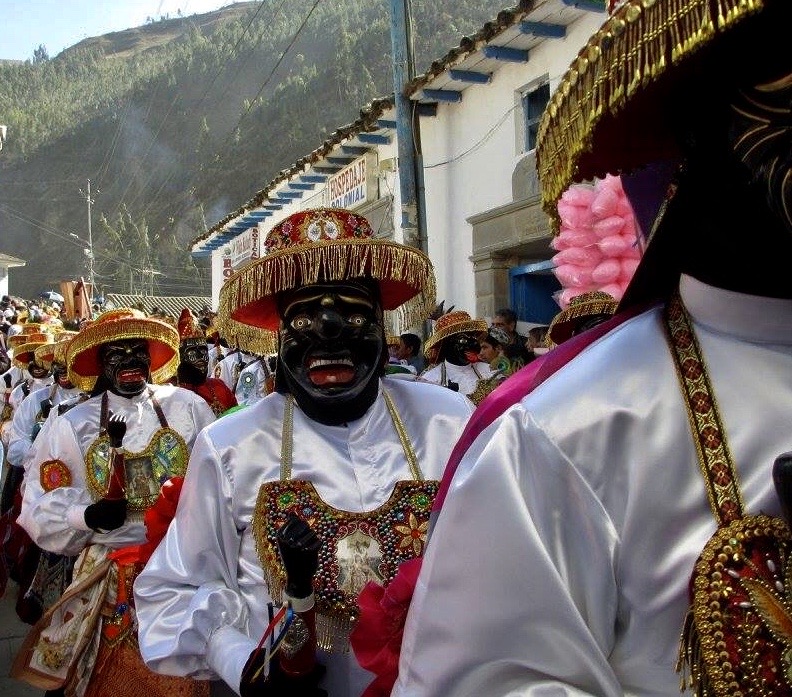
Paucartambo is an Andean village that is a three-hour drive northeast of Cuzco, Perú. Paucartambo is famous for a festival in July that celebrates the Catholic patron saint Mamacha Carmen. Many Andean festivals celebrate a specific patron saint, and Paucartambo acknowledges the Virgen of Carmen, a patron of the mestizos. The festival at Paucartambo remains the most well-known, and is widely recognized for vibrant dances and activities that celebrate and challenge the cultural connections among indians and mestizos.
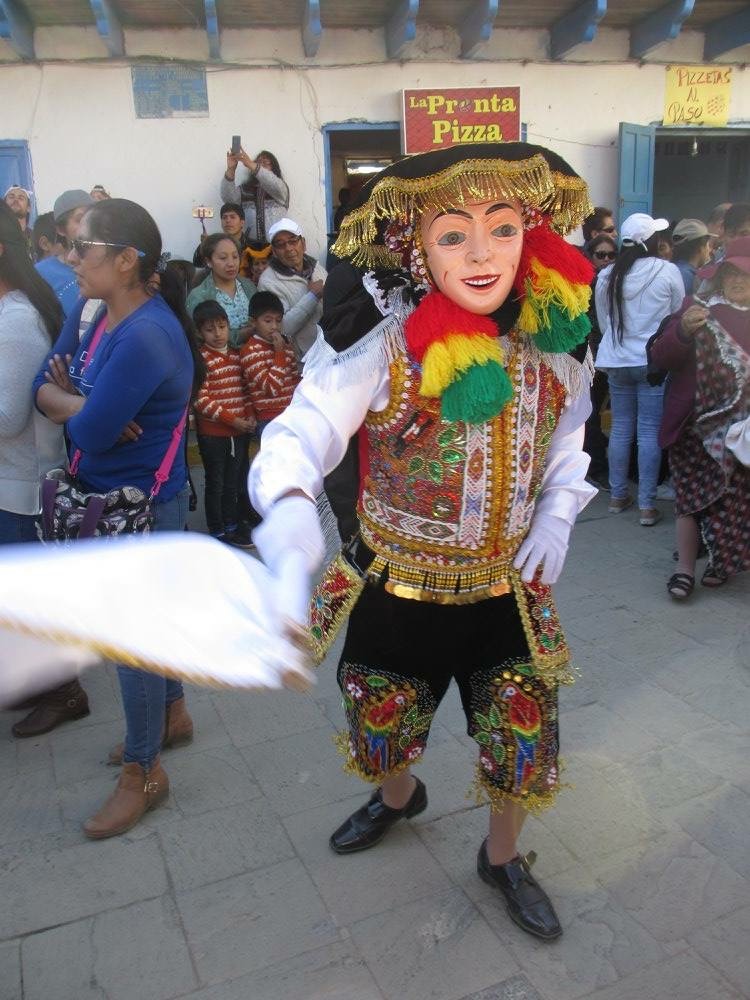
Many other festivals in Peru often idolize a specific patron saint; the festival at Paucartambo remains the most well-known, and is widely recognized for vibrant dances and activities that celebrate and challenge the cultural connections among indians and mestizos.
The patron saint of Paucartambo is named the Virgin of Carmen or La Virgen del Carmen. The Virgin of Carmen represents the annual festival of Paucartambo as a symbol of good health and wellbeing. The patron saint is also venerated similarly to the Quechua deity Pachamama or Mother Earth.
The worship of the patron saint, Carmen, distinguishes the blend of colonial Spanish influences into indigenous dances, costumes, and customs. Each of the dances at Mamacha Carmen revolve around specific intercultural interactions among many different groups in the region.
The dances at the Festival of the Virgin revolve around specific intercultural interactions among many different groups in the region.
The Cocasaru dance depicts men in yellow masks with a green or black stain painted under the chin of each dancer. The Cocasaru masks depict people from the yunka or the Amazon rainforest. The yellow paint represents yellow fever, a serious disease common to the jungle, or alternatively, jaundice. The green or black stain depicts reliance on the infamous coca leaf, known for its properties that alleviate hunger, nausea, and fatigue. This dance emphasizes the poverty and challenges of live in the Amazonian lowlands.
This dance also emphasizes poverty and the trials of jungle life.
The dance of the Cocasaru also relates to chronicles compiled by the Quechua nobleman Guaman Poma, on the ill treatment of the native people during the Spanish conquest. His chronicles were originally compiled as letters and drawings to the King of Spain (Phillip II and III) to expose the cruel treatment that the local Spanish authorities had brought upon the Andean people. Guaman Poma relied on the traditions of caricature that the Spanish had towards the lowland or jungle people. In the dance of Cocasaru, this caricature of representing the lowlanders still thrives in the annual dances at Paucartambo.
Pictures compiled by Guaman Poma.
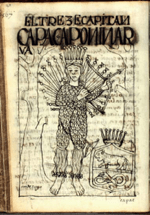
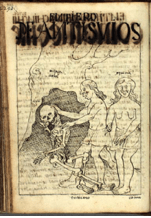
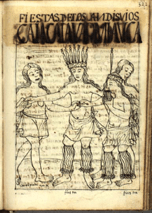
(The Shuar are an Amazonian tribe found in the Peruvian Amazon).
The dancing battle of the Chunchos and the Qollas are, by far, one of the most famous dances at the festival of Mamacha Carmen. The Chunchos, the heroes of the battles, are characterized as the original ethnic group inhabiting the region surrounding Paucartambo. The Qollas, however, are cast as the wild indians from the puna or altiplano region of the Andes that fought against the Chunchos for their land ownership. However, an interesting fact about the Chunchos dance dress at the festival in Paucartambo is that the costume depicts the features of Amazonian indian costumes with its feathered headdress and coins and bangles pierced to the septum.

Another dance is the Qhapaq Negro depicts the black slaves brought to the Andes. The Quechua term Qhapaq is translated to described those who are noble, rich, or powerful.. The ritual symbolism within this dance pivots around the themes of human suffering and sympathy.
The Qhapaq Negro mask provides a caricature of an exaggerated depiction of Afro-Peruvian ancestral ties to Africa.
Another dance similar to the Qhapaq Negro is the Negrillo, which is a gloomier version of the Qhapaq Negro. The Negrillo emphasizes the imprisonment of many Afro-Peruvians slaves in the Andes. Masks used in this dance portray tears running down the face of the dancer to symbolize their hardship, struggles, and suffering.
References:
Mendoza, Zoila S. 2000. Shaping Society through Dance: Mestizo Ritual Performance in the Peruvian Andes. Chicago: University of Chicago Press
Mendoza, Zoila S. 1998. “Defining Folklore: Mestizo and Indigenous Identities on the Move.” Bulletin of Latin American Research, vol. 17, no.2, 1998, pp. 165-183.
Romero, Raul. R. Debating the Past: Music, Memory, and Identity in the Andes. New York: Oxford University Press, 2001.
The Peru Reader: History, Culture, and Politics, ed. By Orin Starn, Carlos Iván Degregori, and Robin Kirk. London: Duke University Press, 119-122, 2005
Turino, Thomas. Music in the Andes: Experiencing Music, Expressing Culture. New York: Oxford University Press, 2008.
Banner image of the Qhapaq Negro mask and costume. Image taken by me July, 2017.
 Tales of a Wandering Ghost